Cultural and indigenous psychologists focus on developing working psychologies for independent cultures (Shweder, 2000, p. 210). These psychologists focus on the mentality, rationality, and pragmatics of a specific group of people (Shweder, 2000, p. 207; Shweder & Sullivan, 1993, p. 500; Allwood & Berry, 2006, p. 251). This differs from cross-cultural psychology in that cross-cultural psychology’s overall goal is to form a universal psychology based on the human mind (Shweder, 2000, p. 207). That being said, cultural psychologists do not deny the shared cognitive foundation of our species. As summarized by Shweder (2002), cultural psychology supports “universalism without the uniformity” (p. 210; Shweder & Sullivan, 1993, p. 517). To make the difference between mind and mentality clear I will once again quote Shweder (2002): “A mentality is that cognized and activated subset of mind that has become the property of, and has been invested in, by some designated person or people” (p. 211).
During our last seminar we discussed the ‘mutual yuck’ (G. Navara, Trent University, personal communication, January 20, 2015). The term ‘mutual yuck’ refers to the rationalizations we form in response to the behaviour of someone from a different cultural background (Shweder, 2000, p. 216). The behavior we are witnessing does not fit in with our own cultural beliefs. These rationalizations are ethnocentric. Professor Navara defined ethnocentrism as “using your own cultural group as a marker for what is normal/appropriate” (Trent University, personal communication, January 20, 2015). Cultural psychology aims to purge the belief that different is akin to inferior (Shweder, 2000, p. 218). As discussed in seminar, it is important to embrace cultural relativism and assess behavior within the appropriate context (G. Navara, Trent University, personal communication, January 20, 2015).
What I had not quite grasped before completing this week’s readings was that my own psychology, Western psychology, is an indigenous psychology (Shweder, 2000, p. 208; Allwood & Berry, 2006, p. 250, 260). In the journal article written by Allwood and Berry (2006) Western psychology was referred to as a “ready-made intellectual package” (p. 252). I had blindly been operating under a latent assumption that Western psychology was the ‘dominant’ psychology. Furthermore, I had not even considered the potential for Canadians to develop an indigenous psychology with features distinct from those of the USA (Allwood & Berry, 2006, p. 260).
By the time I had finished reading the assigned journal articles it was very clear to me that Western psychology should not be a globally dominant psychology. Allwood and Berry (2006) collected information from fifteen prominent figures in indigenous psychology. It was unanimously agreed upon that Western psychology alone cannot rectify the social issues that present themselves in different cultural contexts (Allwood & Berry, 2006, p. 263). The research methods used to conduct these studies do not necessarily provide an accurate depiction of results collected from within alternative cultures (Allwood & Berry, 2006, 264).
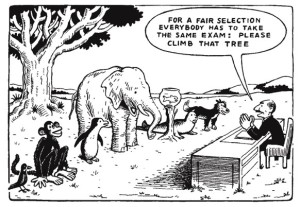
It was frequently suggested within Allwood and Berry (2006) that qualitative research may be the key to accelerating indigenous psychologies, and that they in turn have potential to supplement the growth of cross-cultural psychology (p. 264-265).
During seminar we were asked to identify our cultural group and explain how it has influenced us. I was surprised to realize that prior to that point I had not given much consideration as to which cultural group(s) I identified with. Professor Navara suggested that people often fail to give their own cultural group(s) much thought until they are faced with diversity (G. Navara, Trent University, personal communication, January 20, 2015). He reflected that “culture is the water that we swim in as fish. The environment that we breathe in and live” (G. Navara, Trent University, personal communication, January 20, 2015).
 As a class we discussed several cultural issues; for example, the ‘Happy Holidays’ vs. ‘Merry Christmas’ debate, eating taboo foods in foreign countries (i.e. dog in America/Canada, beef in India), and whether a Sikh boy should be able to carry a (blunt) symbolic dagger in a country that does not typically allow citizens to carry weapons (G. Navara, Trent University, personal communication, January 20, 2015). I found it interesting to hear that Caucasians will soon be the minority. For those of you who are interested in hearing more the following article makes predictions based on the 2010 U.S. census:
http://www.cnn.com/2010/US/07/02/joel.kotkin.census/
I am sure that most of us who have been raised in a multicultural society are accustom to hearing the importance of cultural relativism and equality. That being said, the solution for social issues in a multicultural society is not always black and white. Should a ubiquitous compromise of ‘Happy Holidays’ be mandated, or should each group be allowed to respectfully state the greeting of their choice? Should restrictions be put on the consumption of dog meat? Solely on the way in which the dog was treated prior to death? If any restrictions are made should they then be consistently applied to all animals out of courtesy for the vegan culture?
Recently there has been talk in the media of a young aboriginal girl who chose alternative treatment for her leukemia. Please be advised that the writer of this article took an extremely ethnocentric point of view.
http://www.thestar.com/news/gta/2015/01/20/law-faith-and-tradition-none-of-them-saved-makayla-dimanno.html
Hunter, Logan, Goulet, and Barton (2006) conducted a study in which they explored the healing potential of tradition holistic aboriginal methods (p. 13). They used qualitative methods for research collection and analysis (interviews, observation, etc.) (Hunter et al., 2006, p. 13). Hunter et al. (2006) found traditional aboriginal healing methods to fortify the cultural foundation of the individual, to bring balance into their life, and to strengthen their relationships with others (p. 21). Healing may have a different definition within Aboriginal cultures, but that definition is no less relevant than the one imposed by Western medicine. The healing methods chosen by Makayla and her family are no less worthy of our respect.
I spent several days in the intensive care unit of a hospital last year and have a very distinct memory from that time. A man was wheeled into the foyer and the nurse who had been attending to me walked up to him and loudly announced to his attendants that they could leave him by the door because he wouldn’t be around long enough to bother making a bed. She returned to me and elaborated that he was a Jehovah’s Witness and would not be receiving blood (followed by an exaggerated rolling of her eyes). The man remained in that doorway until his passing. As a Jehovah’s Witness the patient would most likely have been shunned by other religious followers if he had accepted a blood transfusion. It was not necessary for the nurse to agree with the patient’s choice, but it was necessary for her to adopt a culturally relativistic viewpoint and treat him with respect.
References
Allwood, C. M., & Berry, J. W. (2006). Origins and development of indigenous psychologies: An international analysis. International Journal of Psychology, 41(4), 243-268.
DiManno, R. (2015, January 20). Law, faith, and tradition- none of them saved Makayla. Retrieved from http://www.thestar.com/news/gta/2015/01/20/law-faith-and-tradition-none-of-them-saved-makayla-dimanno.html
Hunter, L. M., Logan, J., Goulet, J. & Barton, S. (2006). Aboriginal healing: Regaining Balance and Culture. Journal of Transcultural Nursing, 17(1), 13-22. doi: 10.1177/1043659605278937
Membis, L. (2010, July 2). What will America look like in 2050? Retrieved from http://www.cnn.com/2010/US/07/02/joel.kotkin.census/
Shweder, R. A. (2000). The psychology of practice and the practice of the three psychologies. Asian Journal of Social Psychology, 3(3), 207-222.
Shweder, R. A., & Sullivan, M. A. (1993). Cultural psychology: Who needs it? Annual Review of Psychology, 44, 497-523.
Super (2014, February 5). Please climb that tree! Johny Learns to Blog [Online Image]. Retrieved from http://pranav.amrute.me/business/education-tests/
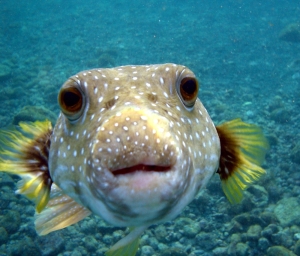
Tetraodantidae (2015, January 5). In Wikipedia [Online Image]. Retrieved from http://en.wikipedia.org/wiki/Tetraodontidae#
 I decided to enroll for this class because I had experienced Professor Navara as a teacher before and I knew that I enjoyed his teaching style. As I mentioned in our first seminar together, this was the final class that I needed to take in order to graduate so I wanted to end my time at Trent on a good note. I was initially daunted by the course syllabus as I tend to shy away from presentations. I would have been even more intimidated if I had grasped how different a research proposal is from a literature review.

 Sam and Virta (2003) focused their research on individuals from Sweden and Norway. They assessed value transmission between generations of immigrant families, as well as families native to the host country (Sam & Virta, 2003, p. 213). Sam and Virta (2003) also assessed the psychological impact of inconsistent values across generations (p. 213). They compared parental value-sets with those held by their adolescent children (mean age of adolescents was 15 years) (Sam & Virta, 2003, p. 217). Questionnaire surveys were distributed within schools and passed along to parents of the adolescents (Sam & Virta, 2003, p. 218). The country in which the participants were born, their age, and their sex were controlled for within the study (Sam & Virta, 2003, p. 221).


 Shih & Sanchez (2005) conducted a review of past research in order to evaluate the impact of multiple race identities on the individual (p. 569). They assessed studies that utilized both quantitative and qualitative methods of analysis (Shih & Sanchez, 2005, p. 569). Depression, academic performance, self-esteem, maladaptive behaviors, and relationship development were all variables operationalized within the review (Shih & Sanchez, 2005, p. 569).


 The following article is an interesting read that discusses the regulatory difficulties faced by Canadians who have spouses attempting to emigrate from their native land and achieve permanent residency:


